.svg)
.svg)
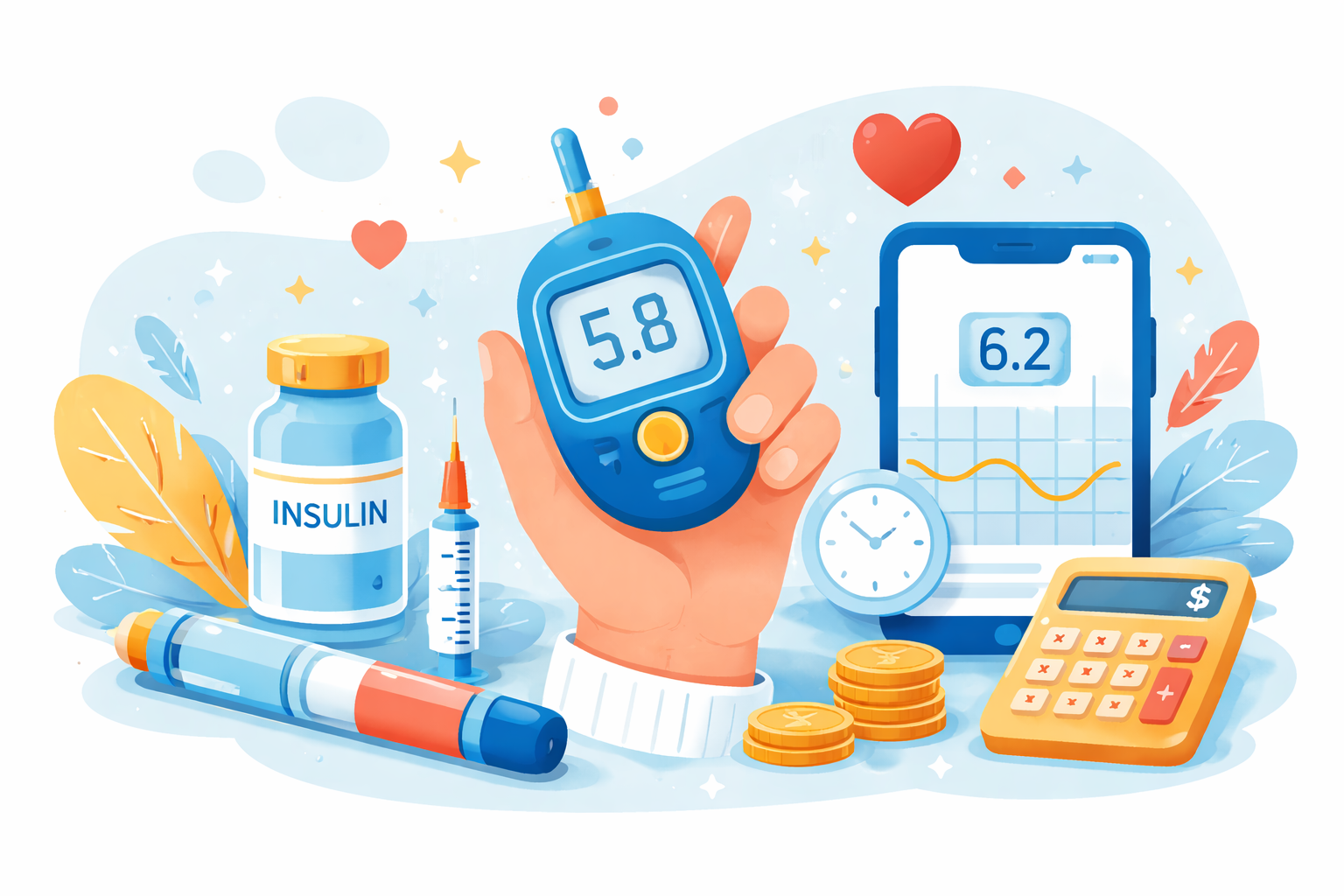
Living with diabetes in Canada is expensive. For incorporated professionals and small business owners, those costs are often paid personally, using income that has already been heavily taxed. That approach works, but it is inefficient.
A Health Spending Account (HSA) offers a smarter alternative. HSAs allow incorporated Canadian businesses to pay for insulin and other diabetes-related expenses using pre-tax corporate dollars, while reimbursements remain tax-free to the individual. When used properly, an HSA can dramatically reduce the true cost of diabetes care.
This guide explains the real cost of diabetes in Canada, how Health Spending Accounts work, which diabetes expenses are eligible, and why HSAs are often superior to traditional insurance for people managing chronic conditions.
The Cost of Diabetes in Canada
Diabetes affects millions of Canadians, and the financial burden continues to rise. For individuals who require insulin or advanced glucose monitoring, annual costs can easily reach into the thousands.
Insulin pricing varies by formulation. Older insulins are less expensive, while newer insulin analogues can cost significantly more. Depending on dosage and insulin type, annual insulin costs often range between $3,000 and $9,000.
Insulin alone is not the full picture. People managing diabetes must also purchase injection supplies and testing equipment. Blood glucose test strips, lancets, pen needles, and syringes are recurring expenses that add up quickly. For individuals testing multiple times per day, testing supplies alone can cost hundreds of dollars annually.
Many people with Type 1 diabetes, and some with insulin-dependent Type 2 diabetes, use insulin pumps. Pump hardware typically costs between $6,000 and $8,000 upfront, with ongoing annual supply costs of several thousand dollars. While some provincial programs offer coverage for eligible individuals, coverage is inconsistent and many private plans exclude pump hardware altogether.
Continuous glucose monitors (CGMs) have become a cornerstone of modern diabetes management. These devices provide real-time glucose data and significantly improve control, but they are expensive. Out-of-pocket CGM costs commonly fall between $2,000 and $4,000 per year, depending on the device and usage.
When all costs are combined, Canadians with partial insurance coverage often still pay several thousand dollars per year out-of-pocket. Without coverage, total annual diabetes costs can reach $10,000 to $15,000 or more. These financial pressures lead many people to delay care or ration supplies, increasing the risk of serious complications.
Why Diabetes Costs Matter to Business Owners
For business owners, diabetes is not only a personal health concern. It directly affects business performance and stability.
Employees who cannot afford proper treatment are more likely to experience health disruptions, missed workdays, and medical emergencies. Over time, this affects productivity and increases indirect costs to the employer.
Benefits also play a major role in recruitment and retention. Employees with chronic conditions evaluate benefit plans carefully, and inadequate coverage can drive good candidates away or push existing employees to seek opportunities elsewhere.
Traditional group insurance plans can create additional challenges. High-cost claims eventually lead to higher premiums, and for small businesses, even one major claimant can significantly impact renewal pricing. Employers often find themselves choosing between escalating premiums and insufficient coverage.
This tension is exactly where Health Spending Accounts become valuable.
What Is a Health Spending Account (HSA)?
A Health Spending Account, also referred to as a Private Health Services Plan, is a CRA-approved benefit available to incorporated businesses in Canada (outside Quebec). It allows a company to reimburse eligible medical expenses while deducting those costs as a business expense. The reimbursement is tax-free to the employee or owner-manager.
Unlike insurance, an HSA does not involve paying premiums. Instead, the company sets an annual spending limit and funds claims only when expenses are incurred. This structure gives businesses far more control and eliminates wasted premiums.
For people managing diabetes, HSAs are particularly effective because they cover a broad range of expenses that insurance plans often restrict.
Are Diabetes Expenses Eligible Under an HSA?
Yes. Insulin and diabetes-related expenses are eligible under a Health Spending Account, provided they meet the CRA definition of medical expenses.
In practical terms, this means insulin, prescription medications, insulin pumps, pump supplies, CGMs, blood glucose meters, test strips, syringes, and related medical services can all be reimbursed through an HSA. If the CRA recognizes the expense as medical in nature, an HSA can generally cover it.
This breadth of coverage is one of the HSA’s biggest advantages for individuals with chronic conditions.
How a Health Spending Account Works
The company first sets an annual HSA limit for each employee or owner. This limit represents the maximum amount that can be reimbursed during the year, not a guaranteed payout.
When a medical expense is incurred, the individual pays for it and submits the receipt to the HSA administrator. The administrator reviews the claim for eligibility and invoices the company. Once paid, the individual receives a tax-free reimbursement, and the company deducts the expense as a health benefit.
The end result is simple: medical expenses are paid with pre-tax corporate dollars instead of after-tax personal income.
HSA vs Traditional Insurance for Diabetes
Individual health insurance plans charge fixed monthly premiums and often impose caps or exclusions on diabetes technology. CGMs and insulin pumps are frequently limited or excluded, and premiums are paid with after-tax dollars.
Group benefit plans can offer broader coverage, but premiums rise over time as claims increase. Coverage rules are rigid, and unused premiums are lost.
HSAs take a different approach. They provide predictable maximum costs, flexible coverage, and full reimbursement of eligible expenses without category restrictions. Many businesses use HSAs either instead of insurance or alongside a basic plan to eliminate gaps.
For many incorporated professionals living with diabetes, an HSA offers broader coverage and better cost control than insurance alone.
Tax Savings Example: $15,000 in Diabetes Expenses
Consider an incorporated Alberta business owner who incurs $15,000 in diabetes-related expenses in a year.
If those expenses are paid personally, the corporation must pay out significantly more income to cover the tax burden. At higher marginal tax rates, the company may need to generate close to $29,000 in gross income for the owner to net $15,000.
Using an HSA, the company pays the $15,000 directly. The expense is deductible, and the reimbursement is tax-free. The difference represents thousands of dollars in avoided tax. Even after modest administration fees, the savings are substantial.
Why HSAs Improve Health Outcomes
Beyond tax efficiency, HSAs remove financial barriers to proper care. When cost is less of a concern, individuals are more likely to follow treatment plans, use recommended technology, and seek preventative care.
Employees who feel supported experience less stress and greater loyalty. Employers benefit from improved productivity and more predictable benefit costs. Families benefit as well, since HSAs typically cover spouses and dependents.
Frequently Asked Questions
Is insulin covered by a Health Spending Account in Canada?
Yes. Insulin is an eligible medical expense and can be reimbursed through an HSA.
Can an HSA pay for continuous glucose monitors?
Yes. CGMs and related supplies are eligible expenses.
Are insulin pumps covered by HSAs?
Yes. Both pump hardware and ongoing supplies qualify.
Who can use a Health Spending Account?
HSAs are available to incorporated Canadian businesses and their employees, including owner-managers paid via T4 income.
Conclusion: A Smarter Way to Pay for Diabetes Costs
Diabetes care is expensive, and paying for it with after-tax income or restrictive insurance plans is inefficient. Health Spending Accounts offer incorporated Canadian business owners a more rational approach.
By using pre-tax corporate dollars to pay for insulin, CGMs, pumps, and other medical expenses, HSAs reduce costs, improve access to care, and provide predictable financial outcomes.
Garrett Agencies helps incorporated professionals design and implement compliant Health Spending Accounts tailored to their needs. If diabetes costs are affecting you or your employees, an HSA may be the most effective solution available.
If diabetes costs are affecting you or your team, the next step is straightforward: speak with an advisor to see whether an HSA makes sense for your business and how to structure it properly.
A short conversation can clarify eligibility, limits, and potential tax savings, and help you decide whether an HSA is the right solution going forward.
%20150px%20x%20150px.svg)
Subscribe to our newsletter
Stay Informed with the Latest Insights and Updates


%20in%20Canada-min.png)